Hung with Intention: How Printed Portraits Transform the Spaces You Live In
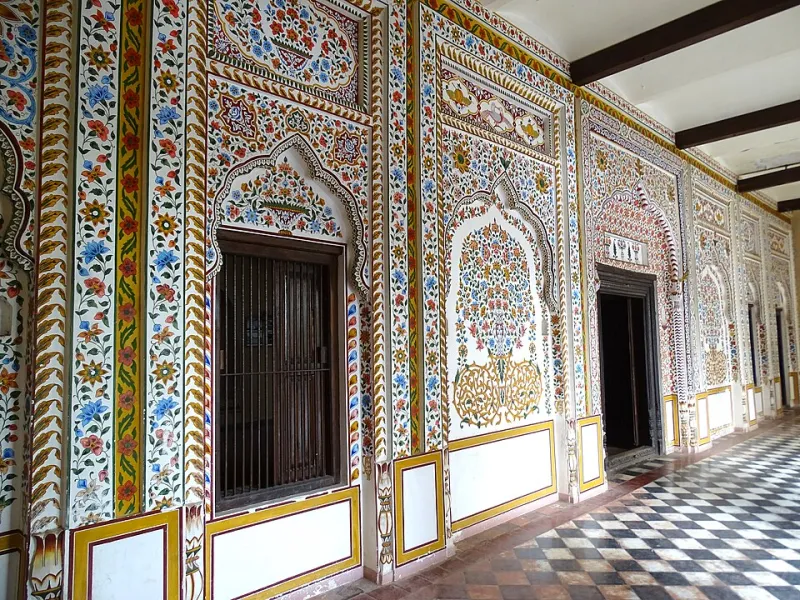
Photo: Shahid Shabbir, CC BY-SA 4.0, via Wikimedia Commons
There is a particular kind of quiet that settles over a living room when a beautifully framed portrait hangs above the mantle. It is not the quiet of emptiness — it is the quiet of something complete. The image does not demand attention the way a notification does. It simply exists, available to whoever pauses long enough to receive it.
This is the quality that separates a printed photograph from its digital counterpart, and it is a distinction worth examining carefully — especially for families, couples, and professionals who have invested in professional portrait sessions and then left those images to age on a hard drive.
The Psychology of Physical Presence
Researchers in environmental psychology have long understood that the objects we surround ourselves with influence our emotional states in measurable ways. The photographs we display are no exception. When a child grows up seeing their family's portrait on the wall — not as a profile picture, not as a screensaver, but as a permanent fixture of the home — they develop a sense of belonging that is difficult to manufacture through any other means.
Dr. David Halle, a sociologist who spent years studying American homes and the art displayed within them, found that family photographs were among the most universally present objects across households of every income level and background. The impulse to see oneself reflected in one's own space is not a luxury instinct. It is a deeply human one.
Professional photography, when printed and framed with care, amplifies this effect considerably. A candid snapshot taken on a phone captures a moment. A professionally composed portrait captures a version of you — or your family, or your relationship — that has been considered, lit, and rendered with genuine artistry. When that image occupies physical space in your home, it becomes part of your daily narrative in a way that a JPEG filed in a cloud folder never will.
What Scrolling Cannot Do
Social media platforms have made it easier than ever to share photographs, and there is genuine value in that accessibility. But the experience of viewing an image on Instagram is fundamentally different from the experience of living with one.
A feed moves. It is designed to move — to pull the eye forward, to generate the next impression before the last one has fully landed. The photograph you posted from your wedding, your newborn session, or your family reunion exists within that current, competing with advertisements, news, and the curated highlights of every account you follow. The emotional context it deserves is almost impossible to sustain in that environment.
A framed print on your hallway wall, by contrast, is encountered differently every time. You walk past it on a Tuesday morning carrying coffee. Your daughter pauses beside it while putting on her shoes. A guest notices it and asks about the story behind it. The image accumulates meaning through repetition and proximity in a way that no digital platform has yet replicated.
The Gallery Wall as Family Archive
One of the most powerful applications of professional portrait photography is the gallery wall — a curated arrangement of framed images that functions as a living archive of a family's or individual's story. When assembled thoughtfully, a gallery wall does not simply decorate a space. It defines it.
The most effective gallery walls tend to include a mix of scales and moments: a large anchor print from a formal portrait session, surrounded by smaller images that capture different chapters — a first home, a milestone birthday, a couple's early years. Professional photographs carry the visual weight necessary to serve as that anchor. They have the resolution, the composition, and the tonal quality to hold a wall in a way that phone snapshots, however charming, often cannot.
At Millie B Photography, clients frequently return after their initial sessions specifically because they have experienced this effect firsthand. A portrait session that began as a practical investment — a headshot, an anniversary gift, a holiday card — becomes the centerpiece of a space that grows around it.
The Investment Argument Reframed
It is common to think of professional photography as an investment in the session itself — the time, the expertise, the edited images delivered afterward. But the fuller accounting includes what happens after the files are delivered. A digital gallery left unopened for three years has returned very little on that investment. A 24x36 canvas print hanging in a family's dining room, viewed daily for a decade, has returned something that resists easy quantification.
Printing is not an afterthought. It is, in many respects, the culmination of the photographic process. The decisions made during a portrait session — the light chosen, the composition refined, the expression waited for — were made in service of an image that deserves to be seen at full scale, in full color, rendered on a surface that does justice to the craft behind it.
Professional photographers often recommend print products for precisely this reason. Fine art prints, gallery-wrapped canvases, and heirloom albums are not upsells in the commercial sense. They are the logical conclusion of work done well.
Choosing What Belongs on Your Walls
The process of selecting images for display is itself a meaningful exercise. It asks you to consider which moments, which expressions, which versions of yourself and the people you love are worth preserving at scale. That question is not always easy to answer, and it is not supposed to be.
A skilled portrait photographer can assist in this process — not by imposing their aesthetic preferences, but by helping clients identify the images that carry the most narrative weight, the ones that will still feel true ten years from now. The technical quality of a professional portrait makes it a viable candidate for large-format printing. The emotional quality of a well-captured moment makes it worth the wall space.
The Home That Knows Its Inhabitants
There is a difference between a house that is furnished and a home that is inhabited. Photographs — particularly professional ones, printed and placed with intention — are among the most direct means of crossing that threshold.
When the walls of a space reflect the people who live within it, something shifts. The home becomes a record as well as a refuge. It holds the evidence of who you were and, by extension, affirms who you are. That is not a small thing. It is, in fact, one of the quieter and more enduring gifts that professional photography can offer — not the image on the screen, but the portrait on the wall, encountered again and again in the ordinary light of an ordinary morning, still there, still true.