The Stock Image Problem: Why Authentic Lifestyle Photography Has Become the Smartest Investment in Your Brand
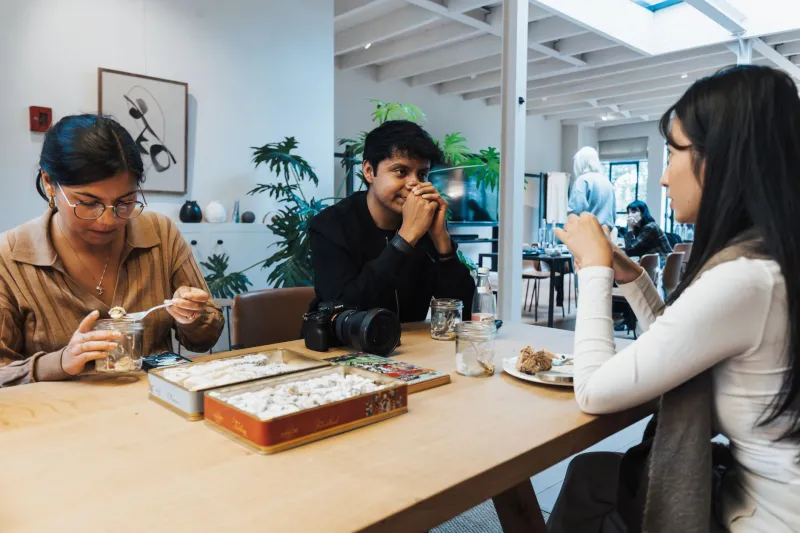
There is a specific image that has appeared on approximately ten thousand American business websites. You know the one. A group of impossibly polished professionals seated around a conference table, mid-laugh, their expressions calibrated to convey both competence and approachability. The lighting is perfect. The diversity is calculated. No one's coffee is cold. No one is actually working.
Consumers recognize this image immediately — not the specific photograph, but the category it represents. And increasingly, recognition is followed not by trust but by skepticism.
The era of stock photography as a viable brand strategy is drawing to a close. What is replacing it is something more demanding, more expensive, and significantly more effective: custom lifestyle photography that depicts real people, real environments, and real work.
Why Stock Photography Stopped Working
Stock photography was never dishonest in theory. It was a practical solution to a genuine problem — businesses needed visual content, professional photography was costly, and a well-chosen stock image could fill the gap adequately. For much of the early internet era, this arrangement served well enough.
The problem is that audiences have become extraordinarily sophisticated visual consumers. Years of scrolling through social media, brand websites, and digital advertising have trained people to distinguish, almost instinctively, between imagery that reflects actual organizational identity and imagery that was purchased from a library. The visual vocabulary of stock photography — the particular quality of its lighting, the slightly-too-perfect staging, the absence of any detail that might be specific to a real company — is now instantly legible as a kind of placeholder.
And placeholders do not build trust. They signal, however unintentionally, that a brand was not willing to invest in showing you who they actually are.
What Lifestyle Photography Actually Communicates
Custom lifestyle photography does something fundamentally different from stock imagery: it tells a specific story about a specific organization. When a technology company commissions photographs of their actual development team working through a real problem, those images carry informational weight that no stock photograph can replicate. The viewer learns something true about how that company operates — its culture, its physical environment, the kinds of people who choose to work there.
This is not a minor distinction. In a marketplace where consumers increasingly make purchasing decisions based on perceived values alignment, the ability to communicate organizational culture visually is a significant competitive advantage. A law firm whose website features genuine portraits of its actual attorneys — in their actual offices, with the particular details that reflect their actual practice — projects a credibility that a stock image of a generic legal professional simply cannot achieve.
The same principle applies across industries. Healthcare practices, real estate agencies, financial services firms, retail brands, hospitality businesses — in every sector, authentic visual representation of the actual organization outperforms generic imagery in building the kind of trust that converts browsers into clients.
The Employee Pride Dimension
There is a dimension to this conversation that is frequently overlooked in strategic discussions about commercial photography: the effect on the people being photographed.
When a company invests in professional lifestyle photography that genuinely represents its team, it sends a message to employees that is both simple and powerful — you are worth showing. This is not a trivial signal. In an era when employee engagement and organizational culture have become central to talent retention strategies, the decision to document your actual workforce with the same care you would apply to your product photography communicates a form of respect that people notice.
Teams that have been photographed professionally for their company's marketing materials consistently report a heightened sense of investment in how those materials perform. There is a natural pride in seeing yourself represented authentically in your organization's public-facing identity — and that pride translates into genuine brand ambassadorship.
The Practical Case for Making the Investment
For businesses accustomed to the apparent economy of stock photography, the upfront cost of commissioning custom lifestyle imagery can seem daunting. This perception deserves examination.
A well-executed commercial photography session produces a library of images that serves an organization across multiple channels and multiple years. Website redesigns, social media content, print collateral, pitch decks, press releases, recruiting materials — the applications for authentic, high-quality visual content are extensive, and the per-use cost of professionally commissioned photography diminishes significantly when distributed across that breadth of application.
Moreover, the cost of stock photography is not as negligible as it once appeared. Subscription-based stock platforms, licensing fees for premium images, and the ongoing management of image rights represent a cumulative expenditure that, when calculated honestly, often approaches the cost of a custom session — without producing anything that is uniquely yours.
At Millie B Photography, commercial lifestyle sessions are designed with this strategic breadth in mind. The goal is not a single striking image but a cohesive visual library that gives an organization the flexibility to represent itself authentically across every platform and every audience.
Authenticity as Competitive Advantage
The most significant shift in American consumer behavior over the past decade may be the premium placed on authenticity. Across industries, across demographics, and across the full spectrum of purchase decisions — from a cup of coffee to a financial advisor — people are demonstrating a consistent preference for brands that feel genuinely real over those that feel carefully constructed.
This preference is not a trend. It is a structural change in how trust is built in a media environment saturated with polished, artificial, algorithmically optimized content. In that environment, genuine visual representation of an actual organization — its real people, its real spaces, its real culture — stands out not despite its specificity but because of it.
The companies that recognize this shift early and invest accordingly are building a visual identity that cannot be replicated by a competitor with access to the same stock library. They are building something that is, by definition, exclusive to them.
That is the real value of authentic lifestyle photography. Not just better images. A better story — one that only your organization can tell.