Three Generations, One Frame: The Art of Photographing Families Across Time
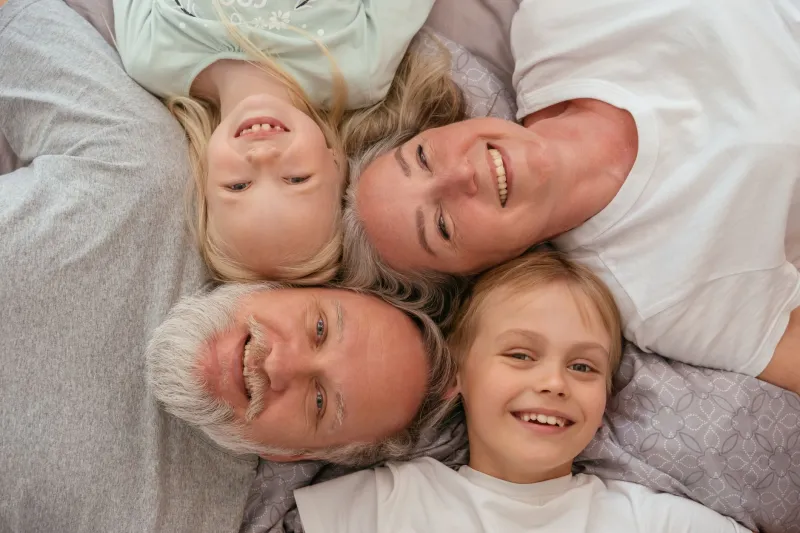
There is a particular kind of photograph that stops people cold when they encounter it years later—not because of its technical perfection, but because of what it contains. A grandmother's hand resting on a grandchild's shoulder. A father standing in the same posture as his own father, though neither of them has noticed. A teenager laughing at something only the oldest person in the room fully understands. These are the images that multigenerational portrait sessions make possible, and they are unlike anything else in photography.
At Millie B Photography, these sessions occupy a special place in the portfolio—not simply because of their visual complexity, but because of the weight they carry. When three or four generations gather in front of a camera, they bring with them an entire architecture of shared history, unspoken bonds, and the quiet passage of time. Capturing that architecture requires preparation, patience, and a clear understanding of what makes these sessions both challenging and irreplaceable.
Why These Sessions Are Worth the Effort
Coordinating a multigenerational portrait session is not a simple undertaking. You are asking people who live in different cities, operate on different schedules, and exist in different physical seasons of life to arrive in the same place, at the same time, dressed in complementary clothing, and emotionally prepared to be seen together. That is a meaningful ask.
And yet families make it work—because somewhere, instinctively, they understand what is at stake. The grandparent who is present today may not be present in the same way five years from now. The child who is small enough to be held will one day be taller than the person holding them. The window in which all of these people can stand together and look into a lens is narrower than any of them would like to admit.
This is the quiet urgency that underlies every multigenerational session. The photographs are not just documentation. They are a record of a relationship in its fullest form—one that time will inevitably alter.
Planning a Session That Works for Everyone
The logistical demands of a multigenerational portrait session are real, and addressing them thoughtfully before the session begins makes an enormous difference in what is achievable on the day itself.
Timing matters more than most families anticipate. When young children and older adults are both part of the group, the window for optimal energy is surprisingly narrow. Late morning sessions—after naps, before lunch—tend to work well for the youngest participants. For grandparents who may find standing for extended periods tiring, keeping the active portion of the session efficient and intentional is equally important. Scheduling with both ends of the age spectrum in mind is not a compromise; it is simply good planning.
Location should serve the story, not just the aesthetic. A family's home property, a meaningful outdoor space, or a setting with genuine personal significance will almost always produce more emotionally resonant images than a generic backdrop. When the environment has meaning—the farm where the grandparents raised their children, the backyard where every Thanksgiving has been celebrated—that meaning finds its way into the photographs in ways that are difficult to manufacture elsewhere.
Color coordination across a large group requires a light touch. Matching everyone in identical outfits tends to flatten the individuality that makes multigenerational portraits interesting. A more effective approach is to work within a cohesive palette—warm neutrals, soft earth tones, muted blues—while allowing each person to express their own style within that range. The result feels unified without feeling uniform.
Posing Strategies That Honor Every Generation
One of the most common mistakes in large family portrait sessions is defaulting to a single rigid arrangement and asking everyone to hold it. This approach may produce technically acceptable images, but it rarely produces emotionally compelling ones.
Effective multigenerational posing begins with relationship rather than geometry. Rather than placing people according to where they look best in the frame, consider placing them according to how they actually relate to one another. A grandmother seated at the center with grandchildren gathered around her communicates something true about her role in the family. A father standing behind his adult children, hand on a shoulder, carries decades of meaning in a single gesture.
For sessions that include very young children, the most honest approach is often the least controlled one. Children below school age are not reliably poseable, and attempting to force stillness typically produces strained expressions across the entire group. Instead, building in time for genuine interaction—letting the youngest members move naturally while the adults respond to them—frequently yields the most authentic images of the session.
With older adults, physical comfort is paramount. Seating options, natural leaning points, and postures that do not require sustained exertion allow grandparents and great-grandparents to remain present and relaxed throughout the session rather than fatigued. A relaxed subject photographs entirely differently than a tense one.
The Details That Tell the Larger Story
Beyond the group compositions, multigenerational sessions offer an opportunity to capture the smaller, more intimate details that often carry the most meaning in retrospect. A close frame of intertwined hands—infant, middle-aged, and elderly—communicates something about continuity that no wide group shot can fully replicate. The resemblance between a grandparent and grandchild, visible in profile. The way a family's laughter looks when it travels across four generations simultaneously.
These detail images are not secondary to the session; they are essential to its completeness. They are the images that tend to accompany obituaries, appear in wedding slideshows, and hang in hallways long after the circumstances that created them have changed entirely.
What These Images Become Over Time
It is worth stating plainly: the value of a multigenerational portrait session does not diminish with time. It compounds.
A photograph taken today of a grandparent holding a grandchild will mean something to the family now. It will mean considerably more in twenty years. And in forty years, it will be among the most significant objects the family owns—not as art, not as documentation, but as evidence. Evidence that these people existed together, that they loved one another, that they stood in the same light at the same moment and chose to be seen.
At Millie B Photography, the approach to these sessions is grounded in that long view. Every choice—timing, location, posing, the quiet moments between the structured ones—is made with the understanding that these images are being created for the future as much as for the present.
If your family has been considering a multigenerational session and waiting for the right time, it is worth reflecting on what that waiting costs. The right time, in most cases, is simply now—while everyone is still here, and while the story is still being written together.